
Resources · Posted February 18, 2026
When Community Coworking Hubs Come Together
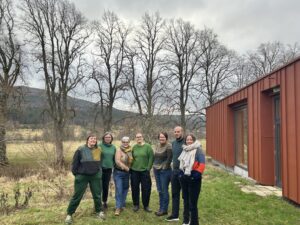
At the end of January, we had the privilege of bringing together a brilliant mix of community coworking hubs and partners for a two-day learning exchange, and we are still feeling the impact of it.
As part of a community coworking hubs learning exchange, we were joined by colleagues from Impact Hub Inverness, Aberfeldy Cowork, Dundreggan Rewilding Centre, EK Collective, Pop Shop Enterprises, Dunkeld & Birnam Community Coworking, Glasgow Collective, Development Trust Association Scotland and the wider Connected Hubs Scotland network. The Melting Pot was there not as the expert in the room, but as a peer, learning alongside everyone else.
By bringing together urban, rural and community-owned hubs, alongside national support organisations, we created a rare and precious space. One where people could speak honestly about what it really takes to run collaborative spaces rooted in place.
Learning from lived experience, not glossy models
Over the two days, our focus was simple but powerful. Strengthening peer learning and shared understanding across hubs.
What emerged was learning grounded not in theory, but in lived experience. We spent time understanding how other hubs operate in practice. Not just what their models look like on paper, but how they manage the day-to-day realities, juggle competing demands, respond to local needs and keep going in a challenging climate.
People spoke about how valuable it was to hear from others who really get it. There was inspiration, reassurance and a deepening appreciation of the many ways hubs can work and still stay true to their values. Most importantly, the exchange created a trusted environment where people felt able to share openly, reflect together and learn across difference.
One participant summed it up far more powerfully than we ever could.
“I have been on the verge of packing it all in for a year, as running a space isn’t stacking up in this climate. However, meeting others in similar positions, who share an understanding of the technical challenges and motivations behind running co-work and collaboration spaces in communities has helped. I know we have a long way to go with the network but feeling I might make it until next year’s meeting now.”
Moments like this remind us why these spaces, and these connections, matter so much.
Getting real about operations and sustainability
Operational challenges were one of the strongest shared themes across the exchange. Staffing, front-of-house hosting, systems, infrastructure and capacity were all discussed openly.
We explored the constant tension between development time and delivery time, the importance of simple and affordable digital systems, and the reality that staff wellbeing and retention are not nice to haves, but fundamental to sustainability. These practical, honest discussions allowed people to compare approaches, share what has worked and what has not, and take peer-tested insights back to their own hubs.
Membership is relational work
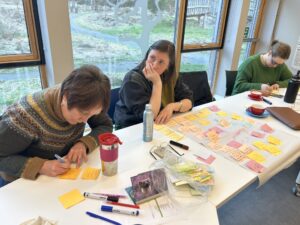
We also spent time unpacking membership and community-building, and one thing became very clear. Membership is not just a transaction; it is relational work.
People spoke about the power of curated connections, personal introductions and dedicated hosts in creating a genuine sense of belonging. Social events came up repeatedly as essential to building community and retaining members, alongside the very real challenge of finding the time and energy to deliver them well.
There was open discussion about churn, pricing and capacity, as well as experimentation with pay-it-forward models, bundled passes and corporate memberships. Together, we landed on a shared insight. Connection itself is the product community hubs offer. Sustaining that connection requires intentional design, care and support.
From individual challenges to collective action
As the exchange unfolded, something shifted. Conversations moved beyond individual organisational challenges towards what might be possible if we worked together.
There was a clear appetite for shared programmes, joint storytelling, peer knowledge exchange and practical tools that could be adapted locally. Collaboration was not seen as an added burden, but as a way to test ideas, share risk and extend impact in ways no single hub could achieve alone.
As one participant put it.
“Thanks again for organising and running the residential, it was great to meet people, have good conversations and make good connections.”
The unexpected benefits
Alongside the intended outcomes, the exchange created some powerful additional benefits. Many of us spoke about the reassurance that comes from realising our challenges are not unique, and the confidence that grows when you feel less alone. That sense of validation strengthened collective resilience and reminded us why peer spaces matter, especially right now.
We also used the time to clarify expectations of the wider network. Increasingly, people saw the network not as another thing to manage, but as an enabler. A space to connect, amplify learning, share resources and support collective action.
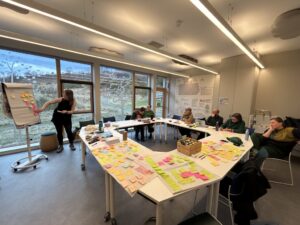
Perhaps most importantly, the exchange helped move learning from ideas towards action. The sheer volume of practical insight captured over the two days has already shaped tangible next steps, including shared toolkits, micro-collaboration groups and collective case studies. Bringing together hubs rooted in very different places deepened our understanding of how place shapes delivery, while reinforcing just how adaptable hub models can be when learning is shared.
What we would do differently next time
Being honest about what could be improved feels important.
While the exchange generated a huge amount of insight, we did not always have enough protected time to move from reflection into concrete action. With everyone juggling heavy workloads, some conversations stayed at the level of ideas rather than progressing into prioritised next steps or pilots. In future, we would build in more intentional space to support that shift from learning to doing.
Sustainability and income were discussed extensively, but often at a conceptual level. There is a clear appetite for deeper, braver conversations about the numbers, including cost structures, pricing trade-offs and financial viability at different scales.
Although operational challenges were front and centre, most perspectives came from leadership roles. Future exchanges would be richer with stronger representation from front-line and operational staff, whose insight is critical to delivering great experiences on the ground.
Inclusion and accessibility were present throughout discussions, but often implicitly. We did not always create enough space to explore who hubs still struggle to reach, where barriers persist, and how tensions between inclusion and financial sustainability are navigated in practice.
We also focused intentionally on hub-to-hub learning, which meant community and member voices were largely absent. That was appropriate for this exchange, but it is something we would like to integrate more intentionally next time.
Finally, while we built strong relations hips and trust, we did not fully resolve how collaboration would continue beyond the event. That gap has directly shaped our next steps, including micro-collaboration groups, shared resources and digital tools to support continuity.
Looking ahead
Taken together, these reflections are not shortcomings. They are learning. They have helped us be clearer about where future exchanges and network activity can add the most value, and how we can make learning more actionable, inclusive and sustained over time.
We are deeply grateful to Scottish Community Alliance for the funding that made this exchange possible, and to every hub and partner who showed up with honesty, generosity and curiosity. The work of building resilient, community-rooted hubs is hard, but moments like this remind us we are not doing it alone.
Read our Connected Hubs Report to see how we aim to bring together coworking hubs to strengthen communities and build a more inclusive economy across Scotland.