
Resources · Posted September 8, 2026
Resilient Leaders, Sustainable Organisations
One of our facilitators, Keira, tells us about the importance of creating time and space for leaders to reflect, learn and connect with others facing similar challenges.
We recently worked with a group from The Robertson Trust to explore what it takes to build resilience and leadership skills, both personally and organisationally, in an increasingly complex and demanding world. In this blog, our facilitator, Keira Oliver, shares her reflections from the journey so far.
In all my work, across sectors and organisations, the most consistent ask of people is for more space and time to reflect, think through tricky issues and be together with others they can learn from. However, as work and life feel more pressured, there is less room and more need to justify creating that space, of trying something different. But if we always do what we’ve always done, we’ll always get what we’ve always got.
For me, the stakes in terms of the impact on the health of leaders, their teams and the people they serve are too high to bring in a programme that is recognisable and what people they expect will help – which tends to be definitive answers, quick fixes and tools.
There is a place for these however, as life becomes increasingly complex, the most honest and liberating response is to be able to say truthfully that I don’t have the answers. But between us, I’m pretty sure we can get close enough to try something, learn from it and create change from there.
“It’s invaluable to come together with other organisational leaders in a non-judgemental & non-competitive space to consider how to move forward personally & organisationally in a way that is both sustainable & feels enjoyable! The hive mind is wonderful & the focus on personal resilience is really unique in a leadership course.”
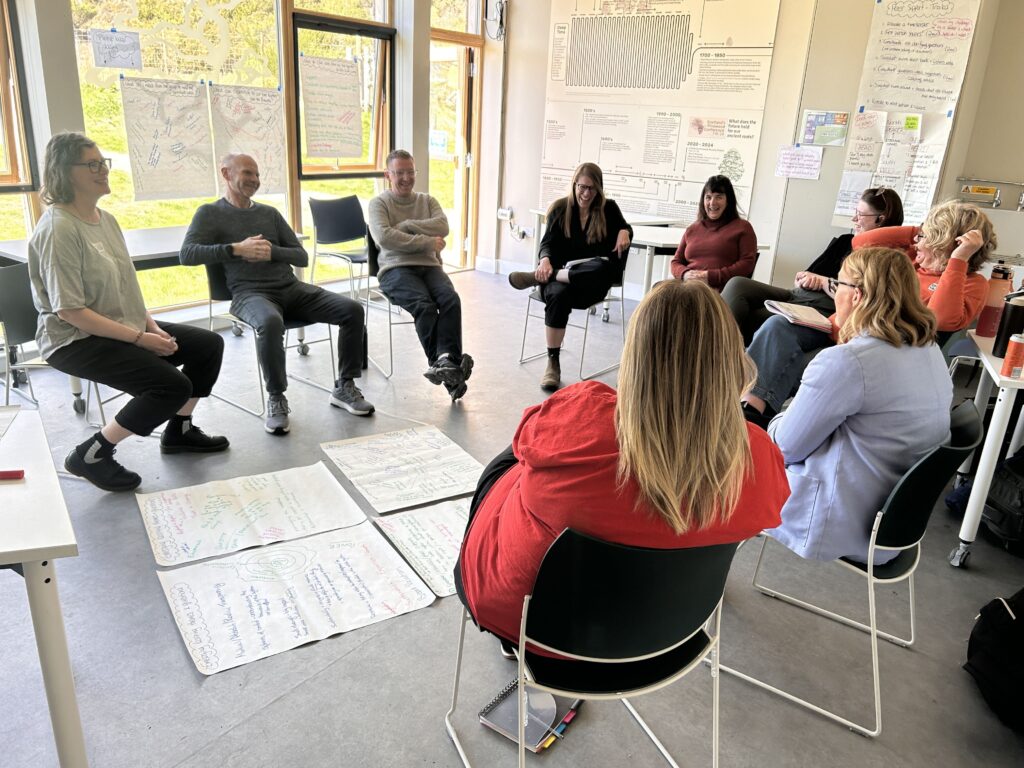
The participants are in roles where their organisations provide crucial services that often no one else in the area does. Our current models of leadership often emphasise quick, decisive, action-orientated behaviour and as a result, people often feel isolated and overwhelmed with the responsibility.
Over time, this can erode personal and organisational resilience and sustainability. Sharing in a structured, supportive way with peers who understand the situation you are in because of their own experience can help you realise you are not alone and, crucially, that you alone cannot resolve the systemic issues your community faces. Coupled with an iterative learning approach, new pathways can open up that you couldn’t see at first, when you identify an action to try out, learn from and adapt in response.
“Being able to meet up and chat through various issues, challenges and scenarios with leaders out with my own organisation has proven to be invaluable in terms of my own personal development. In turn, this can only be positive for my workplace.”
The opportunity to work with a group over a length of time is precious. Perspectives on what helps strengthen resilience, hell what resilience even is, are varied. Participants’ needs can be diverse and change over time. All these factors, and more, meant that co-designing a learning pathway as we went along was going to be more valuable than identifying topics in advance. It comes with its challenges – it keeps me on my toes in discerning what practice, tool or conversation topic might be helpful to bring in, sometimes in real time – but I fundamentally believe it is a more responsive and so valuable use of the group’s time and energy.
Together we are focusing on WHAT participants want to learn and HOW to learn it. I’m a big believer in paying particular attention to the learning environment and gently pushing against expected ways of learning together, to create an interesting, dynamic space where participants are responsible for creating their own learning, not just consuming it.
“Having ‘time out’ with like-minded and same purpose organisations and people has been invaluable. Having a safe and open space to be honest, knowing you will get honest feedback, has made some hard choices easier.”
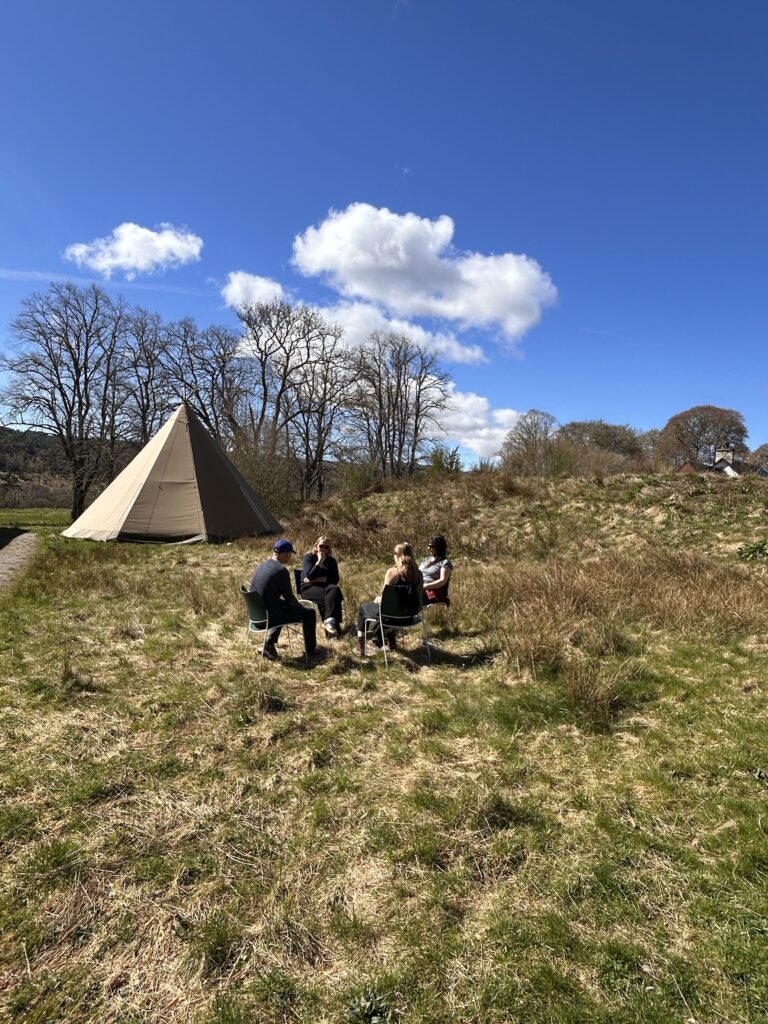
We meet in person at the beginning, middle and end of the 8-month programme with a rhythm of online meetings every few weeks in between. As a result of our initial two days together, the group decided how they wanted to be together in-person versus online which shapes the depth of conversation I design for. What they wanted to focus on was then distilled into:
WHAT
- “Who am I & who is the organisation?” (navigating identity, role and boundaries)
- Power dynamics and relationships (boards, funders, systems change)
- Sustainable organisations (resources, workload, regeneration not just growth)
HOW
- Leading from the “whole self” (mind, body, emotions, reflective practice)
- Collective leadership and learning together (peer support with challenge & celebration)
Each session surfaces new or adapted questions to spend time on as we go, e.g.:
- What do I understand resilience to mean?
- What is my relationship to when things are “unknown”?
- How do we make collective decisions and share responsibility?
The first gathering is usually a defining moment in the formation of any group. And it had some sticky moments as the group gradually got to know each other and me and had some quite deep reflective experiences that were unexpected and, in some cases, unwelcome. Instead of shying away from these, the participants supported each other, took time on their own to process some more and ultimately came back to the subsequent sessions trusting in the process and ready for more.
It was quite a humbling experience for me as a facilitator to be part of. The main insight that has emerged as a result and that we continue to work with is that resilience comes from within yourself. Systems and conditions heavily influence what we can do and how we show up but when working in rigid and often overbearing systems, we need to cultivate the individual and collective capacity to cope, adapt and transform the conditions that impact us.
“As a third sector leader, it’s hard to make time to reflect, explore ideas and develop as an individual and for your organisation. This program is allowing me to foster meaningful, deep and personal connections with other leaders to gain support, to brainstorm and to learn – in a way that feels tailored, super valuable and unique to my needs and those of my organisation.”
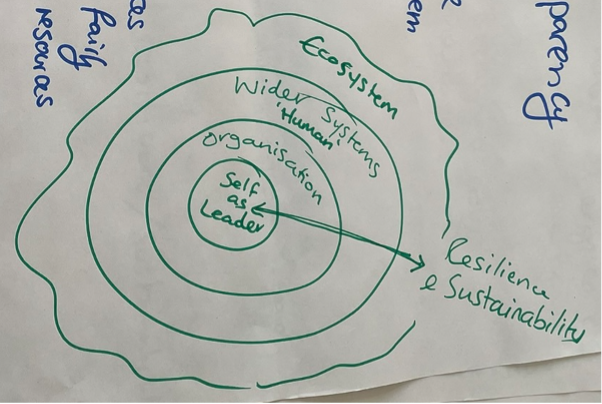
Pic: diagram drawn by participants as an emerging learning theme
We are halfway through our journey and I’m already seeing how this group, through the learning pathway they are co-creating, are flexing and growing these capacities for themselves and in service of each other. Time will tell what seeds will grow from here. I’m looking forward to how the group will integrate with the next cohort, and in turn what learning pathway the next cohort co-designs. For sure, a bit of thoughtfully created time, space and support goes a lot further than we usually expect. I help with some of that. The group does the rest.
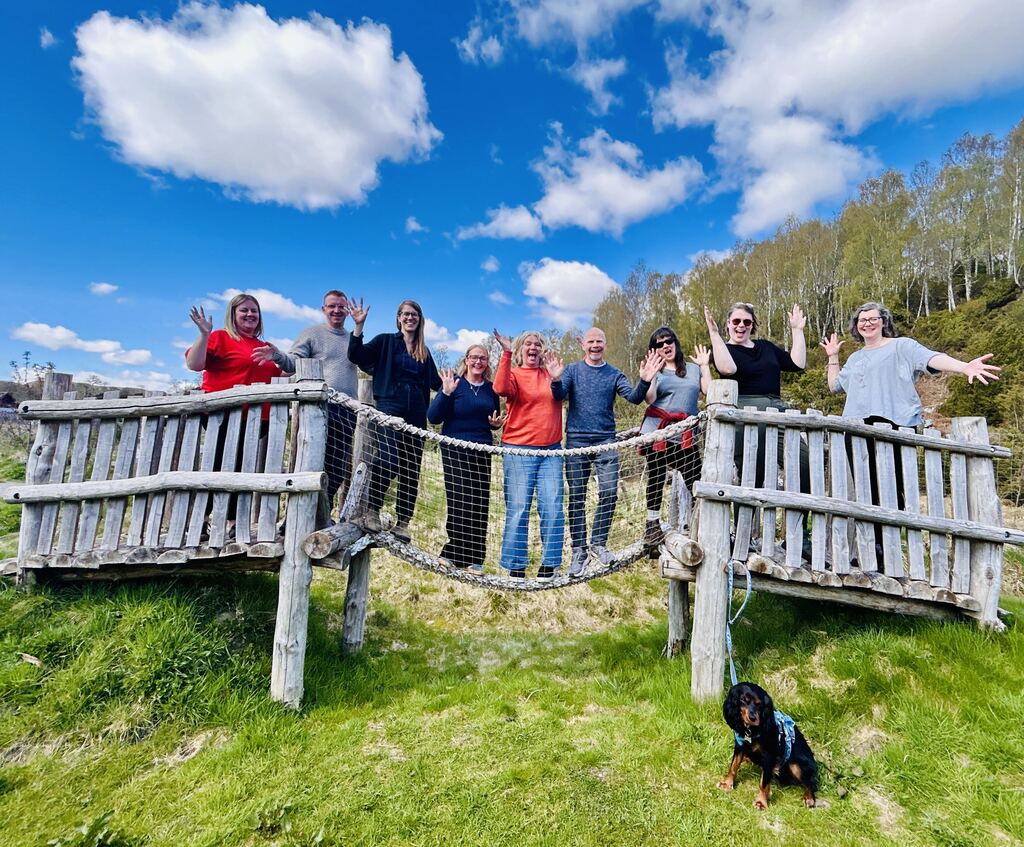
“The Robertson Trust are committed to funding work which prevents and reduce poverty in Scotland. To do so, the organisations we support need strong and resilient leadership to help deliver the system change that’s needed to end poverty. The Melting Pot created an innovative model of place based support. Bringing leaders from across Highland, Aberdeenshire and Moray together to co-designing a tailored package of support to help address areas of development and build an impactful peer support network. TMP approach gives leaders a safe space to explore their own practice and learn from each other and creating a legacy of peer support.”
-Lorna Wallace, Funding Officer, The Robertson Trust
If you are interested in learning more about this programme, or The Melting Pot Consultancy, please check out the webpage (themeltingpotedinburgh.org.uk) or contact us directly ([email protected]).